
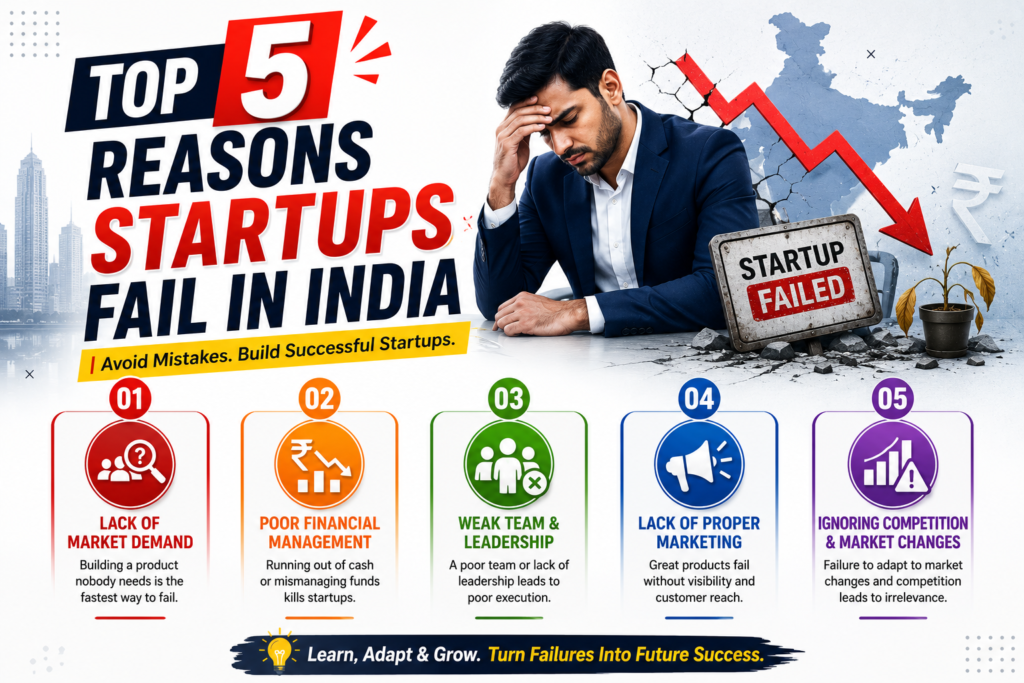
Top 5 Reasons Startups Fail In India
India has become one of the fastest-growing startup ecosystems in the world. Thousands of entrepreneurs launch new businesses every year with innovative ideas and ambitious goals. From technology and e-commerce to education and healthcare, startups are transforming multiple industries across the country.
However, despite the growing opportunities, many startups struggle to survive in the long run. Research shows that a large percentage of startups shut down within the first few years due to various operational, financial, and strategic challenges.
Understanding the common reasons behind startup failure can help entrepreneurs avoid costly mistakes and build stronger businesses. In this blog, we will discuss the Top 5 Reasons Startups Fail In India and how founders can overcome these challenges effectively.
Why Understanding Startup Failure Is Important
Every entrepreneur dreams of building a successful company, but success requires more than a great idea. Founders must understand market demand, financial management, customer expectations, and business strategy.
Learning from failed startups helps entrepreneurs:
- Avoid common mistakes
- Improve decision-making
- Build sustainable business models
- Manage risks effectively
- Increase long-term growth potential
Many startup failures happen because founders ignore early warning signs or fail to adapt to changing market conditions.
For startup insights and entrepreneurial guidance, visit Startup Pe Charcha.
Top 5 Reasons Startups Fail In India
1. Lack Of Market Demand
One of the biggest reasons startups fail is the absence of real market demand. Many entrepreneurs build products based on assumptions instead of actual customer needs.
A startup may have innovative technology or creative ideas, but if people do not need the product, the business cannot survive.
Common Mistakes:
- Launching without market research
- Ignoring customer feedback
- Solving problems that are not important
- Overestimating product demand
How To Avoid It:
Before launching, startups should:
- Conduct customer surveys
- Analyze competitors
- Validate product-market fit
- Build a Minimum Viable Product (MVP)
Testing ideas early helps reduce risks and improve product relevance.
Tools like Google Trends can help entrepreneurs analyze customer interest and market demand.
2. Poor Financial Management
Financial problems are one of the leading causes of startup failure in India. Many startups spend heavily on marketing, office spaces, or unnecessary operations without proper financial planning.
When cash flow becomes unstable, businesses struggle to survive.
Financial Challenges Startups Face:
- Limited funding
- High operational costs
- Poor budgeting
- Weak revenue planning
- Excessive spending
How To Avoid It:
Entrepreneurs should:
- Maintain proper financial records
- Track expenses carefully
- Focus on sustainable growth
- Avoid unnecessary debt
- Build emergency financial reserves
Good financial management improves business stability and investor confidence.
3. Weak Marketing And Branding
Many startups fail because customers are unaware of their products or services. Even a great product cannot succeed without proper marketing and branding.
In today’s digital world, businesses must build strong online visibility to attract customers.
Common Marketing Problems:
- Poor social media presence
- Weak branding strategy
- Inconsistent content marketing
- Lack of customer engagement
- Ineffective advertising campaigns
How To Avoid It:
Startups should focus on:
- Social media marketing
- Content creation
- SEO optimization
- Paid advertising
- Brand storytelling
Strong branding builds customer trust and increases market recognition.
4. Team And Leadership Issues
A startup’s success depends heavily on the quality of its team and leadership. Many startups fail because of internal conflicts, poor communication, or lack of direction.
Founders who cannot manage teams effectively often face operational problems and employee dissatisfaction.
Common Team Challenges:
- Poor hiring decisions
- Lack of leadership skills
- Weak communication
- No clear business vision
- Employee burnout
How To Avoid It:
Startup founders should:
- Build a strong company culture
- Hire skilled and motivated people
- Improve leadership abilities
- Encourage teamwork and communication
- Set clear goals and responsibilities
A motivated and aligned team improves productivity and business growth.
5. Failure To Adapt To Market Changes
Business trends and customer preferences change rapidly. Startups that fail to adapt often lose relevance in competitive markets.
Many businesses continue using outdated strategies instead of innovating according to customer needs and industry developments.
Examples Of Poor Adaptation:
- Ignoring technology trends
- Refusing customer feedback
- Delayed decision-making
- Sticking to outdated business models
How To Avoid It:
Startups should:
- Monitor industry trends regularly
- Stay updated with technology
- Listen to customer feedback
- Improve products continuously
- Be flexible with strategies
Businesses that innovate consistently have higher chances of long-term success.
Entrepreneurs can stay informed about industry trends through platforms like Forbes Entrepreneurs.
Additional Challenges Faced By Indian Startups
Apart from the top five reasons, startups in India also face:
- Regulatory challenges
- Intense competition
- Difficulty in raising funds
- Talent retention problems
- Limited scalability planning
Understanding these challenges helps founders prepare better strategies for growth.
Conclusion
India offers tremendous opportunities for entrepreneurs, but building a successful startup requires careful planning, market understanding, and strong execution. The Top 5 Reasons Startups Fail In India include lack of market demand, poor financial management, weak marketing, leadership issues, and failure to adapt to change.
Startups that focus on customer needs, financial discipline, strong branding, and continuous innovation are more likely to achieve long-term success. Entrepreneurs should learn from common mistakes and build businesses with sustainable growth strategies.
Every successful startup journey includes challenges, but proper planning and smart decision-making can significantly improve the chances of success.
For more startup tips, business strategies, and entrepreneurial insights, stay connected with Startup Pe Charcha.