
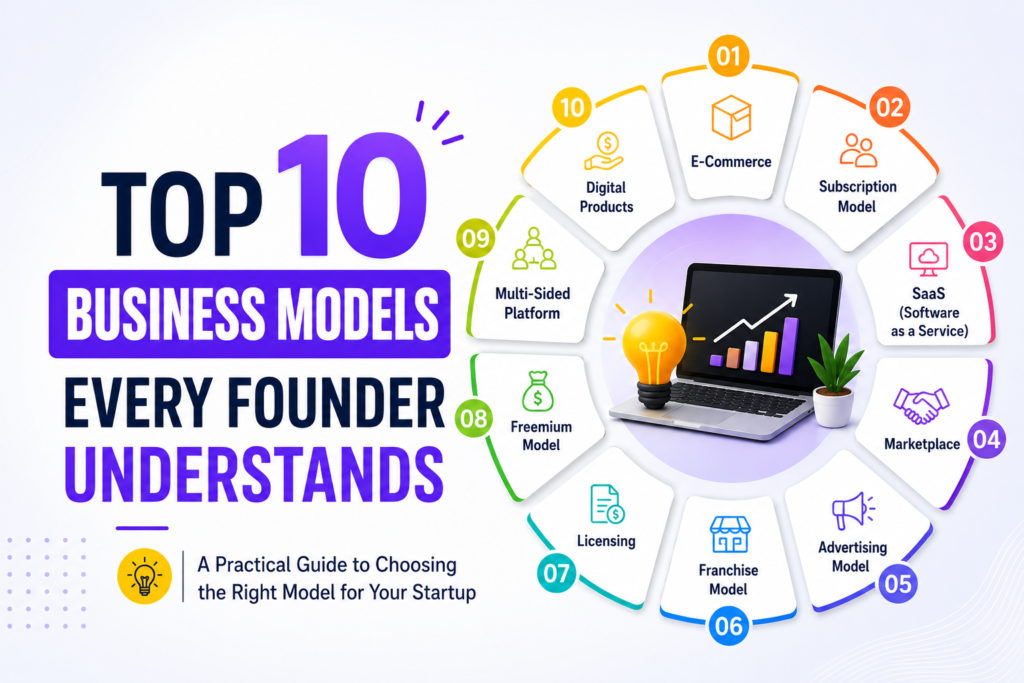
Top 10 Business Models Every Founder Understands
Starting a company requires more than a great product or innovative idea. Every entrepreneur must understand how the business will generate revenue, attract customers, and sustain long-term growth. This is where choosing the right structure becomes important.
A strong revenue strategy helps startups improve profitability, manage operations efficiently, and scale faster in competitive markets. Different companies follow different approaches depending on their industry, target audience, and market demand.
In this blog, we will explore the Top 10 Business Models Every Founder Should Know and understand how these structures help businesses grow successfully.
Why Choosing The Right Revenue Structure Matters
The way a company earns money directly affects its growth potential and customer experience. A well-planned structure helps businesses:
- Build consistent income
- Improve scalability
- Attract investors
- Increase customer retention
- Strengthen market positioning
Entrepreneurs who understand different operational strategies can make smarter decisions during the early stages of growth.
For startup guidance and entrepreneurial insights, visit Startup Pe Charcha.
Top 10 Business Models Every Founder Should Know
1. Subscription Business Model-Based Structure
This approach allows customers to pay monthly or yearly for continuous access to products or services.
Popular examples include:
- Streaming platforms
- SaaS tools
- Membership communities
Advantages:
- Predictable monthly income
- Better customer loyalty
- Long-term financial stability
Many digital companies prefer this structure because recurring payments improve cash flow.
2. Freemium Business Model
Freemium platforms offer basic features for free while charging users for premium upgrades.
This approach is commonly used by:
- Mobile apps
- Productivity platforms
- Cloud storage companies
Advantages:
- Attracts large audiences
- Builds trust quickly
- Encourages paid conversions
Technology startups often use this strategy to grow rapidly.
3. Online Retail Business Model
Online selling has become one of the fastest-growing commercial approaches globally. Businesses sell products directly through websites or marketplaces.
Examples include:
- Fashion stores
- Electronics brands
- Lifestyle companies
Advantages:
- Wider market reach
- Lower physical infrastructure costs
- Easier expansion opportunities
Platforms like Shopify help entrepreneurs launch online stores efficiently.
4. Marketplace Business Model
Marketplace platforms connect buyers and sellers while earning commissions from transactions.
Examples include:
- Food delivery apps
- Ride-sharing services
- Freelancing websites
Advantages:
- Scalable operations
- Lower inventory management
- Strong revenue opportunities
This structure is highly popular among modern tech startups.
5. Advertising Business Model-Based Revenue
Companies using this strategy earn income by displaying advertisements to their audience.
Common examples:
- Blogs
- Social media platforms
- Video streaming services
Advantages:
- Monetizes large audiences
- Multiple earning opportunities
- Strong scalability potential
Content-focused businesses often depend heavily on advertising revenue.
6. Franchise Business Model
A franchise system allows entrepreneurs to operate under an established brand using proven operational methods.
Popular industries:
- Restaurants
- Education institutes
- Retail chains
Advantages:
- Strong brand recognition
- Reduced market risk
- Faster expansion possibilities
This structure works well for entrepreneurs looking for established operational support.
7. Direct-To-Consumer (D2C) Business Model
In this approach, brands sell products directly to customers without distributors or middlemen.
Examples:
- Skincare brands
- Clothing companies
- Fitness products
Advantages:
- Better profit margins
- Strong customer relationships
- Full brand control
Modern startups increasingly prefer direct selling because of growing online shopping habits.
8. Software-As-A-Service (SaaS) Business Model
Cloud-based software platforms provide services through subscriptions instead of one-time purchases.
Popular examples:
- CRM tools
- Accounting software
- Team collaboration platforms
Advantages:
- Recurring revenue
- Global customer reach
- Lower distribution costs
SaaS companies are among the fastest-growing technology businesses today.
9. Affiliate Income Business Model
Affiliate marketers earn commissions by promoting products or services from other companies.
Common platforms:
- Blogs
- YouTube channels
- Social media creators
Advantages:
- Low startup investment
- Flexible work opportunities
- Passive income potential
This strategy is popular among content creators and digital entrepreneurs.
10. On-Demand Service Business Model
On-demand services provide products or solutions instantly whenever customers require them.
Examples include:
- Grocery delivery apps
- Home service platforms
- Transportation services
Advantages:
- High customer convenience
- Growing market demand
- Scalable operations
Changing consumer lifestyles have increased the popularity of on-demand platforms significantly.
How Entrepreneurs Can Select The Right Structure
Choosing the best approach depends on several factors:
- Industry trends
- Customer expectations
- Revenue goals
- Scalability potential
- Operational costs
Entrepreneurs should analyze competitors and customer behavior before finalizing their plans.
Tools like Google Trends help founders understand industry demand and market interest.
Common Mistakes Startups Should Avoid
Many startups struggle because they:
- Select unsuitable revenue strategies
- Ignore customer feedback
- Focus only on short-term profits
- Lack scalability planning
- Fail to adapt to market trends
Avoiding these mistakes can improve long-term growth and sustainability.
Conclusion
Understanding different ways companies operate and generate revenue is essential for startup success. The Top 10 Business Models Every Founder Should Know discussed above provide valuable insights into how businesses scale and achieve profitability.
From subscription services and SaaS platforms to marketplace systems and direct selling approaches, every structure offers unique advantages depending on the industry and target audience.
Entrepreneurs who carefully evaluate customer needs, industry trends, and growth potential are more likely to build sustainable businesses with long-term success.
For more startup insights, entrepreneurial strategies, and business growth tips, stay connected with Startup Pe Charcha.